StoreScout AI

AI store location analysis software

AI Store Location Analysis for Small Business Site Selection

Screen a storefront before signing a lease with competitor analysis, demographic fit, nearby demand drivers, and a practical on-site diligence checklist.

Free previews use Census and Gemini 2.5 Flash-Lite without requesting Places. Authorized full reports add Google Places and Gemini 2.5 Flash when live providers are configured.

Start with a storefront address

Choose the business type and trade area. Guests receive 1 free preview per device per day; signed-in accounts receive up to 3 per day.

Business Location Analysis Built for Lease Decisions

StoreScout AI helps local operators evaluate a retail site before spending weeks on manual research. The report is designed for first-pass site selection, not sales forecasting.

Competitor Analysis for Store Location

Compare direct and indirect competitors

Same-category business count, ratings, reviews, distance, and density risk.

Demographic Analysis for Business Location

Match the customer profile to the concept

Population, income, age, education, renter share, and commute signals for the trade area.

Retail Site Selection Checklist

Turn data into lease diligence

Practical questions about visibility, parking, access, rent, zoning, and field observation.

Merchant Case Studies and Example Location Reports

These sample scenarios show how small business owners can use AI-powered location screening before negotiating a lease or visiting competitors.

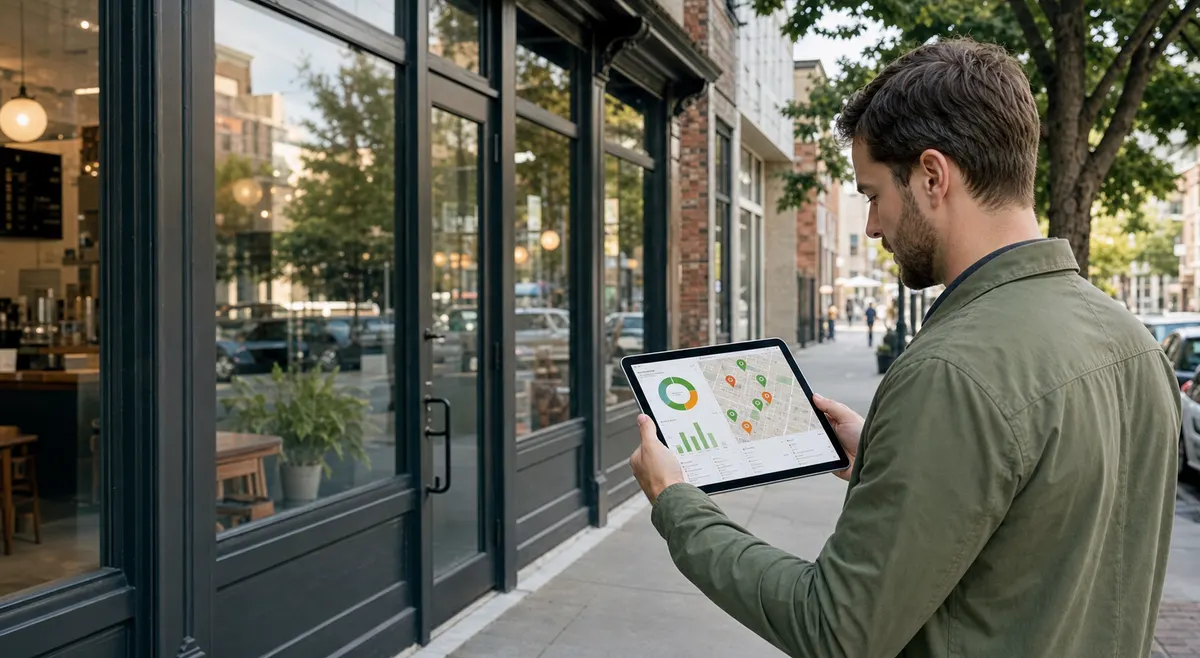
Coffee shop owner reviewing AI store location analysis near a storefront

Independent Coffee Shop / Austin, TX

Coffee Shop Location Analysis Before Signing a Lease

Sample input: coffee shop, 1-mile radius, downtown Austin storefront.

What the owner needed to know

The operator wanted to compare morning demand, office traffic, nearby apartments, and competitor density before committing to a small cafe lease.

Signals reviewed

  • 12 same-category competitors
  • Strong apartment and office signals
  • Morning routine demand likely

Main risk to validate

Several nearby operators have high review counts, so positioning and storefront visibility need field validation.

What the report surfaced

The preview highlighted a strong customer base, several same-category competitors, and a fieldwork checklist for visibility, parking, and peak-hour observation.
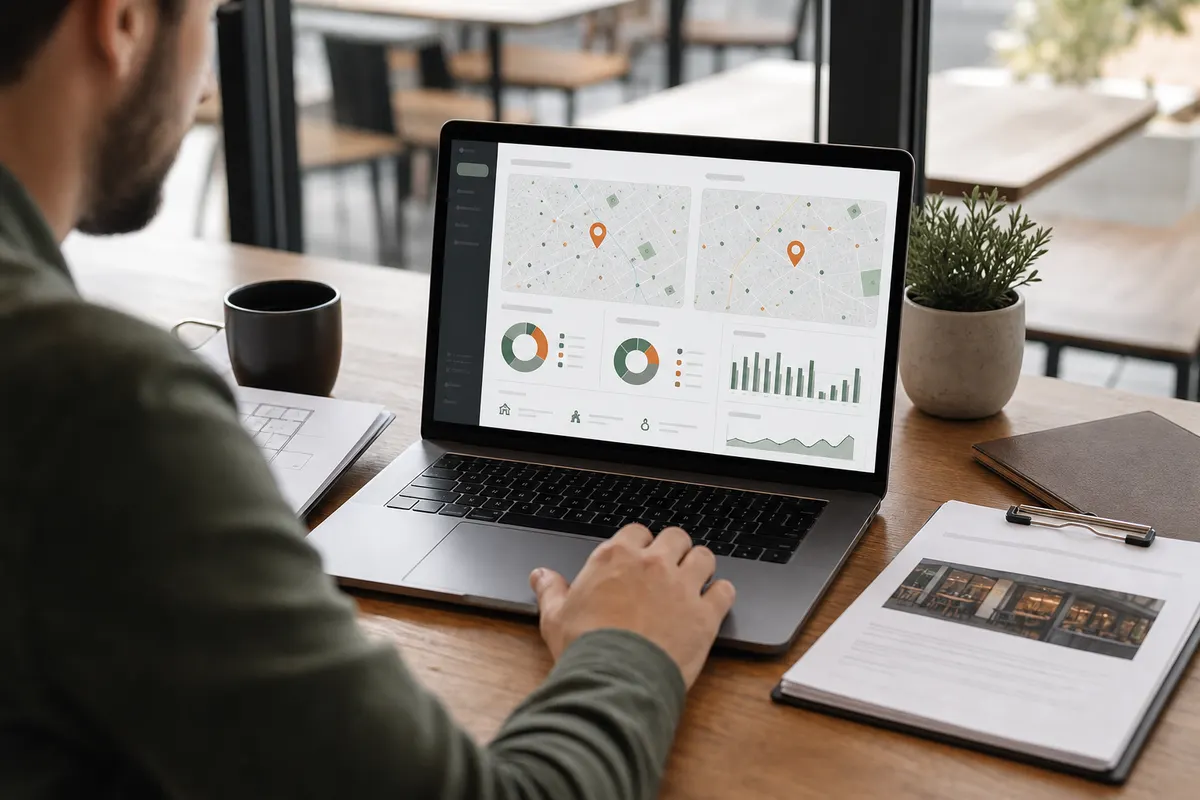
Restaurant owner comparing storefront locations with competitor and demographic analysis dashboard

Fast Casual Restaurant / New York, NY

Restaurant Site Selection with Competitor Density Signals

Sample input: restaurant, 0.5-mile radius, Lower Manhattan storefront.

What the owner needed to know

The team needed a fast way to compare two storefronts by nearby restaurants, review volume, lunch traffic anchors, and delivery-friendly demand.

Signals reviewed

  • High restaurant density
  • Strong lunch and delivery context
  • Hotel and office POIs nearby

Main risk to validate

A dense market can prove demand, but menu overlap and lease economics must be checked block by block.

What the report surfaced

The report separated demand signals from saturation risk and gave the owner a practical list of competitors to inspect in person.

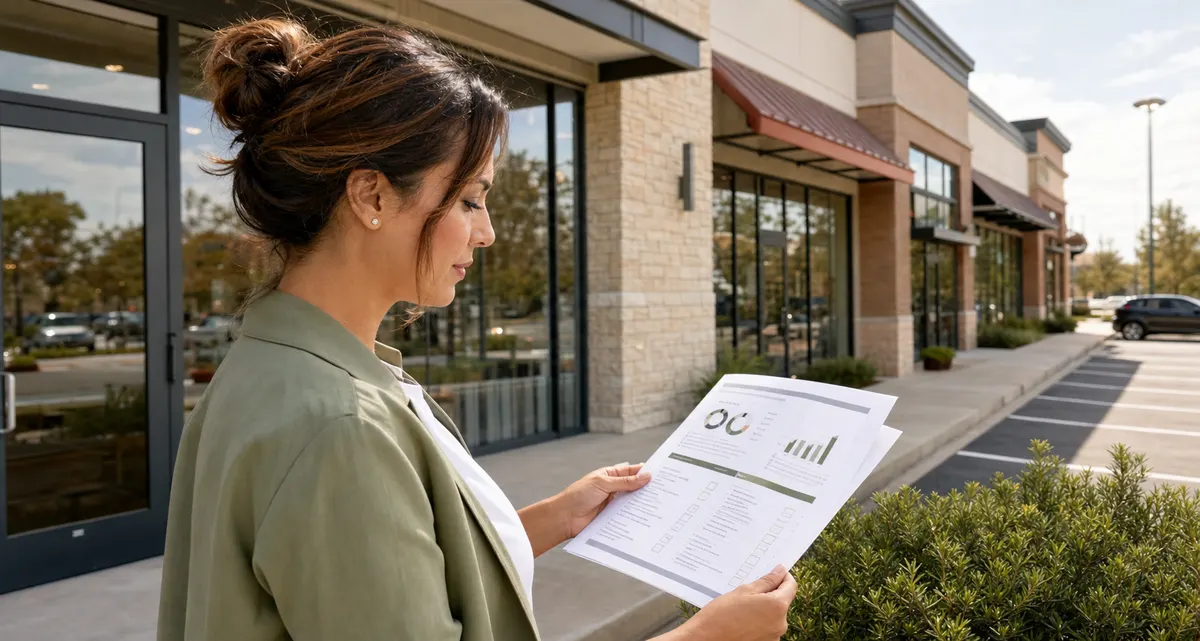
Nail salon owner evaluating a retail plaza storefront with a location screening report

Nail Salon / Miami, FL

Nail Salon Demographic Analysis for a Retail Plaza

Sample input: nail salon, 1-mile radius, Miami retail plaza.

What the owner needed to know

The salon owner wanted to understand local income fit, renter share, parking convenience, retail co-tenancy, and appointment-based repeat demand.

Signals reviewed

  • Supportive income profile
  • Retail co-tenancy present
  • Parking convenience needs review

Main risk to validate

Repeat appointments depend on access, hygiene trust, and convenience more than city-level demographics alone.

What the report surfaced

The screening report showed where demographics were directionally supportive and which on-site risks needed verification before negotiation.

What an AI Location Screening Report Helps You Verify

StoreScout AI is designed for first-pass diligence before you spend serious time on a lease. It turns location signals into a practical screening view, not a revenue forecast.

Demand fit

Report signal

Population, income, age, renters, and education signals for the trade area.

Competition

Report signal

Same-category operator count, ratings, reviews, and density risk.

Convenience

Report signal

Nearby offices, apartments, schools, parking, transit, gyms, and retail anchors.

Fieldwork

Report signal

A checklist for validating visibility, traffic, access, rent, and local constraints.

Who Should Use This Store Location Tool

StoreScout AI is most useful when you have a real address to screen and need a structured first-pass view before deeper lease, legal, and field diligence.

Use it for

Decision fit

Coffee shops, restaurants, salons, pet services, brokers, consultants, and first-time operators comparing storefronts.

Do not use it as

Decision fit

A revenue forecast, legal opinion, zoning decision, financing approval, or substitute for lease review.

Best next step

Decision fit

Use the report to decide where to spend fieldwork time, which competitors to inspect, and what questions to ask before negotiating.

Manual Research vs StoreScout AI

The goal is not to replace judgment. The goal is to turn scattered research into a repeatable checklist before you spend time visiting every possible site.

QuestionManual researchStoreScout AI preview
How many competitors are nearby?Search maps manually and count by hand.Organizes competitor count, rating, reviews, and distance.
Does the area match my customers?Look up scattered demographic sources.Summarizes population, income, age, renters, and commute signals.
What should I check on site?Build your own checklist from experience.Provides fieldwork questions tied to the business type.
Can I trust the score alone?No. Manual judgment is still required.No. The report is a structured screen, not a guarantee.

AI Store Location Analysis FAQ

What is AI store location analysis?

Short answer

AI store location analysis is a first-pass screening workflow that organizes competitor, demographic, nearby POI, and fieldwork signals so a business owner can decide whether a storefront deserves deeper diligence.

How do I know if a store location is good?

Short answer

A good location usually has customer demand that matches the business type, manageable competitor pressure, practical access, visible frontage, realistic rent, and field-verified traffic during relevant time windows.

What demographics matter for a business location?

Short answer

Population, household income, age, education, renter share, commute patterns, and nearby residential density can all matter, but the right mix depends on the business model and price point.

How many competitors are too many?

Short answer

There is no universal number. Competitors can prove demand, but the risk rises when nearby businesses have the same category, price point, customer occasion, and stronger review volume.

Can AI predict whether a store will succeed?

Short answer

No. The report is not a revenue forecast or guarantee. It is a structured screening tool that helps identify risks and questions before lease negotiation.

What should I check before signing a commercial lease?

Short answer

Check rent economics, build-out costs, permits, zoning, parking, delivery access, visibility, competitor quality, neighboring tenants, and observed traffic at peak and off-peak times.